
12 Dining Room Sideboard Styling Ideas

I absolutely adore sideboards in the dining room! They’re such versatile pieces, offering both essential storage and a fantastic canvas for expressing your personal style. I’ve found that a well-styled sideboard can truly anchor a dining space, making it feel complete and inviting. It’s not just about filling the surface; it’s about creating a cohesive look that enhances the room’s overall aesthetic while still being practical. Whether your style is minimalist, bohemian, traditional, or something in between, there are so many creative ways to make your sideboard shine.
I’m excited to share my favorite ways to style these wonderful pieces, from balancing height and texture to incorporating personal touches and functional elements. You’ll discover ideas for every budget and taste, along with my tips for avoiding common styling mistakes. Get ready to transform your dining room sideboard into a stunning focal point!
Classic Symmetrical Balance
I often start with a classic symmetrical arrangement because it brings such a sense of calm and order to a dining room. I love placing two identical lamps or tall vases at either end of the sideboard, then grounding the center with a large piece of art or a mirror. This creates a strong visual anchor. On a tighter budget, I would opt for matching thrift store finds that I could paint to unify them. The key is to ensure the items are proportionate to the sideboard’s length and height; avoiding pieces that are too small or too large prevents a cluttered or sparse look. This method always makes a space feel more polished and intentional.
Asymmetrical Organic Flow
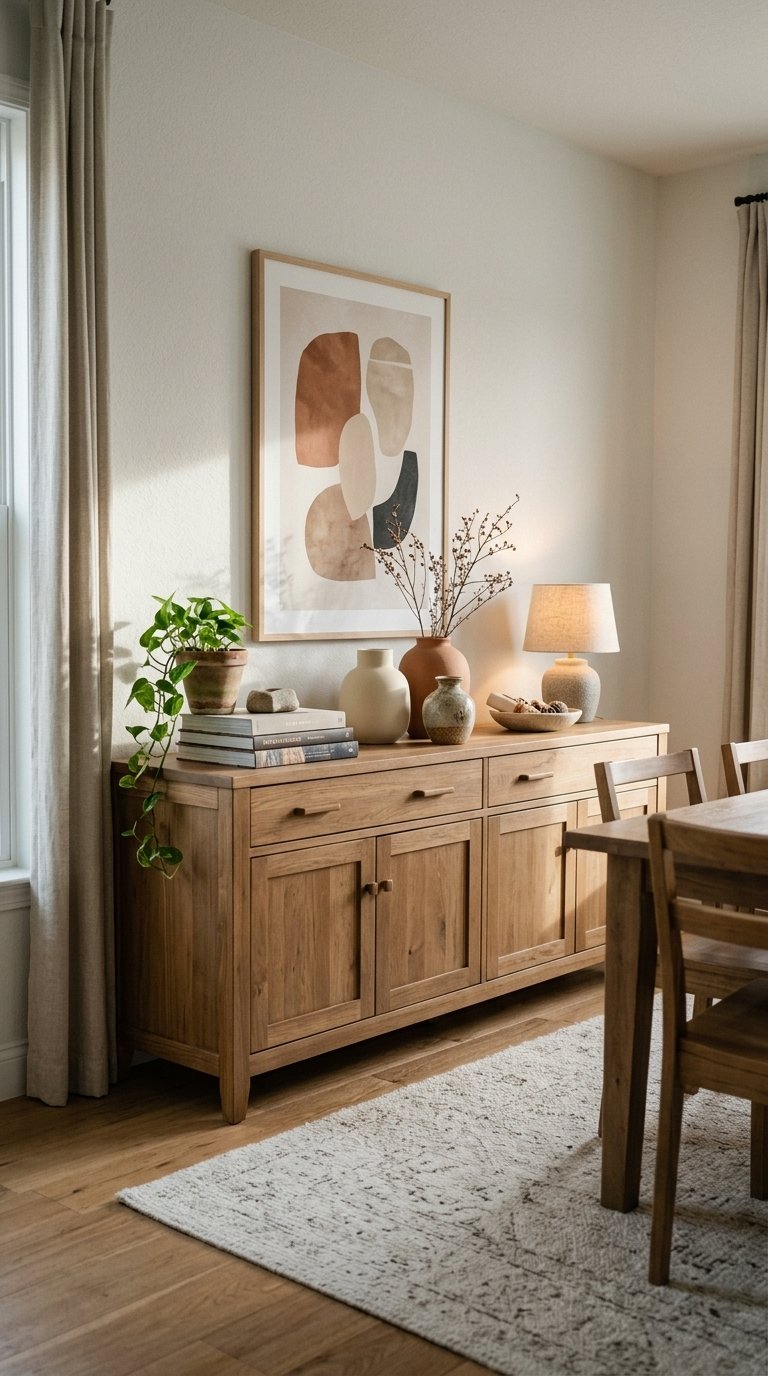
For a more dynamic and modern feel, I really enjoy an asymmetrical approach. Instead of matching pairs, I focus on balancing visual weight. I might place a tall, sculptural piece like a large vase with branches on one side, then balance it with a cluster of smaller, varying height items on the other—think a stack of books, a small plant, and a decorative box. The trick is to imagine a visual line down the center and ensure both sides feel equally “heavy” without being identical. I always recommend varying textures and materials, like mixing ceramics with wood and greenery, to add interest. Don’t be afraid to leave some negative space; it helps the eye rest and appreciates each piece.
Curated Collection Display
I love using a sideboard to tell a story, especially by displaying a curated collection. This could be anything from vintage ceramics to travel souvenirs or even a series of small botanical prints. I group items with a common theme or color palette, arranging them in odd numbers for a more natural look. For instance, I might display three different-sized antique glass bottles or five unique seashells. To avoid clutter, I’m careful not to put everything out at once; rotating pieces seasonally keeps the display fresh and allows each item to shine. This is a wonderful way to infuse personality into your dining space without spending a fortune.
Classic Symmetrical Balance
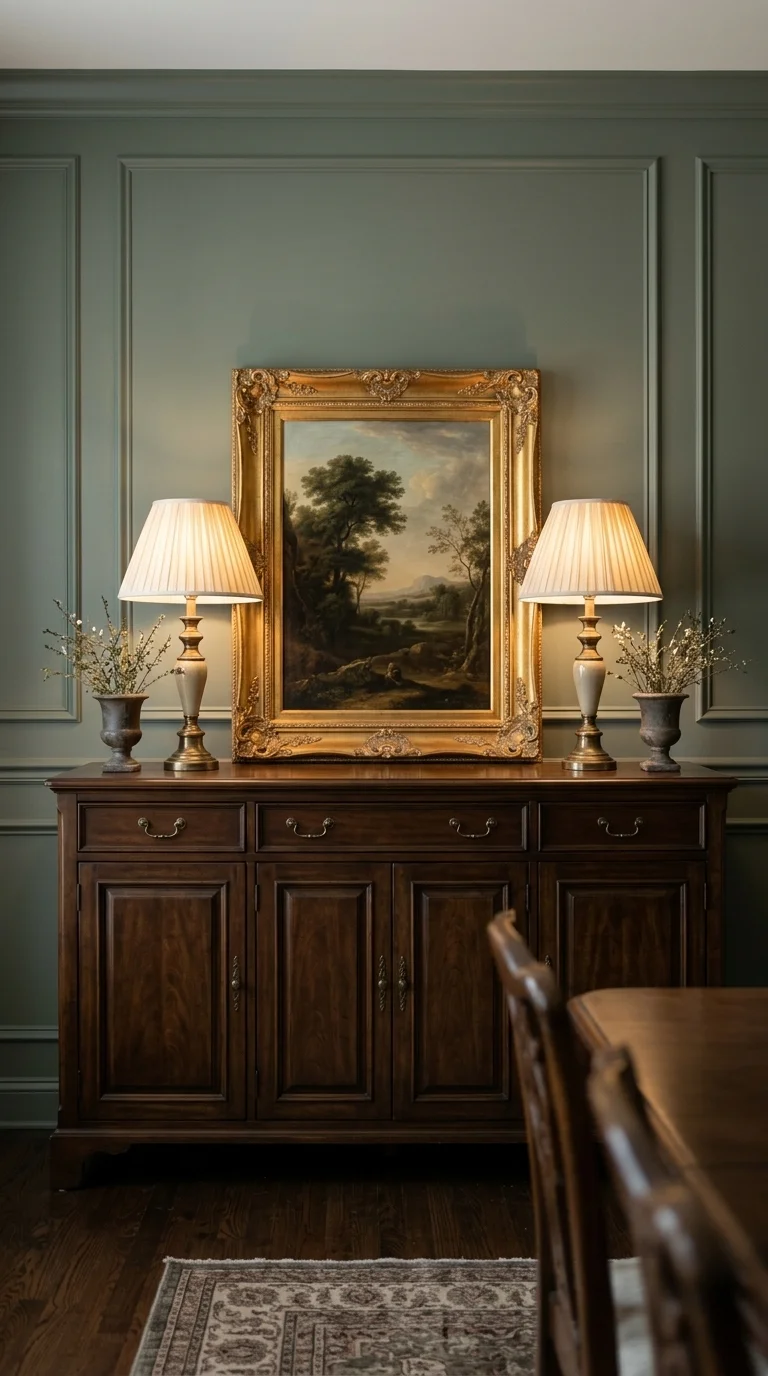
I often start with a classic symmetrical arrangement because it brings such a sense of calm and order to a dining room. I love placing two identical lamps or tall vases at either end of the sideboard, then grounding the center with a large piece of art or a mirror. This creates a strong visual anchor. On a tighter budget, I would opt for matching thrift store finds that I could paint to unify them. The key is to ensure the items are proportionate to the sideboard’s length and height; avoiding pieces that are too small or too large prevents a cluttered or sparse look. This method always makes a space feel more polished and intentional.
Asymmetrical Organic Flow
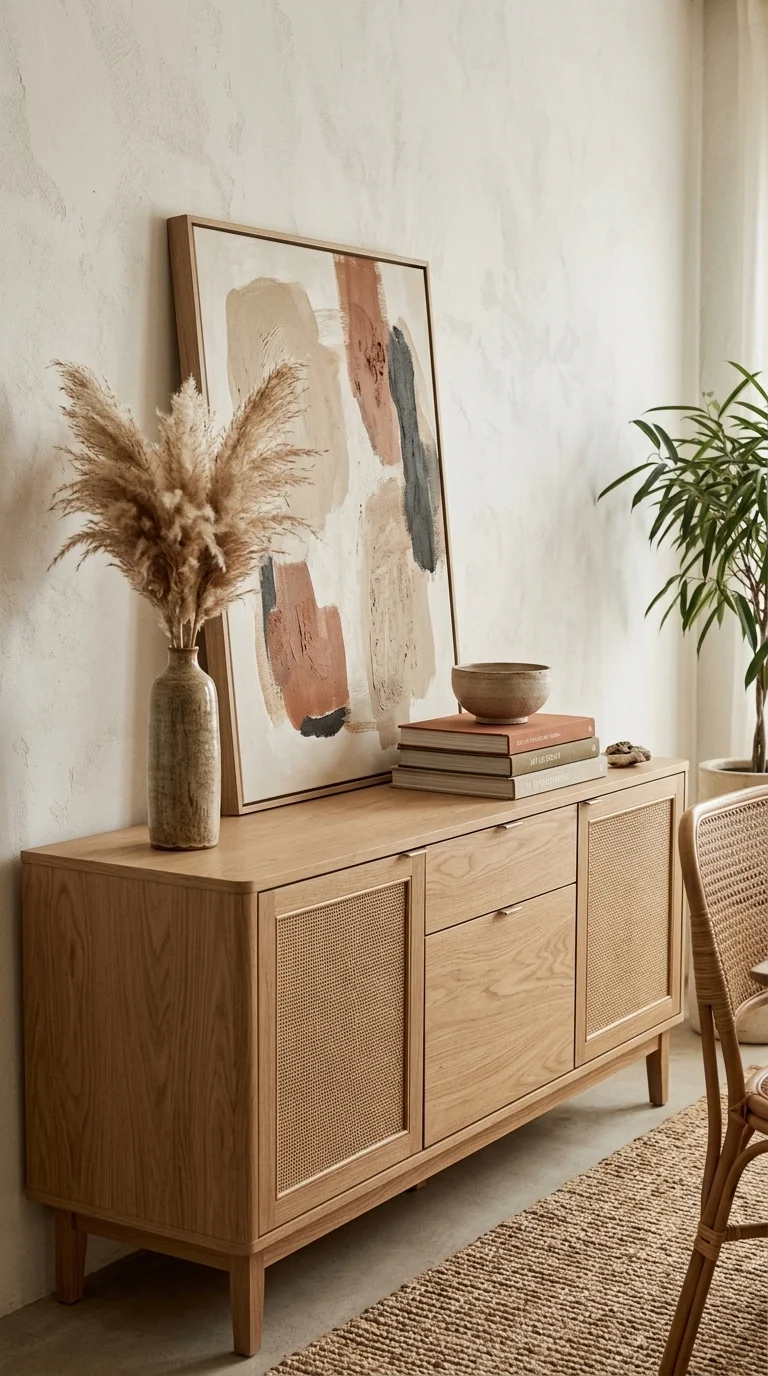
For a more dynamic and modern feel, I really enjoy an asymmetrical approach. Instead of matching pairs, I focus on balancing visual weight. I might place a tall, sculptural piece like a large vase with branches on one side, then balance it with a cluster of smaller, varying height items on the other—think a stack of books, a small plant, and a decorative box. The trick is to imagine a visual line down the center and ensure both sides feel equally “heavy” without being identical. I always recommend varying textures and materials, like mixing ceramics with wood and greenery, to add interest. Don’t be afraid to leave some negative space; it helps the eye rest and appreciates each piece.
Curated Collection Display
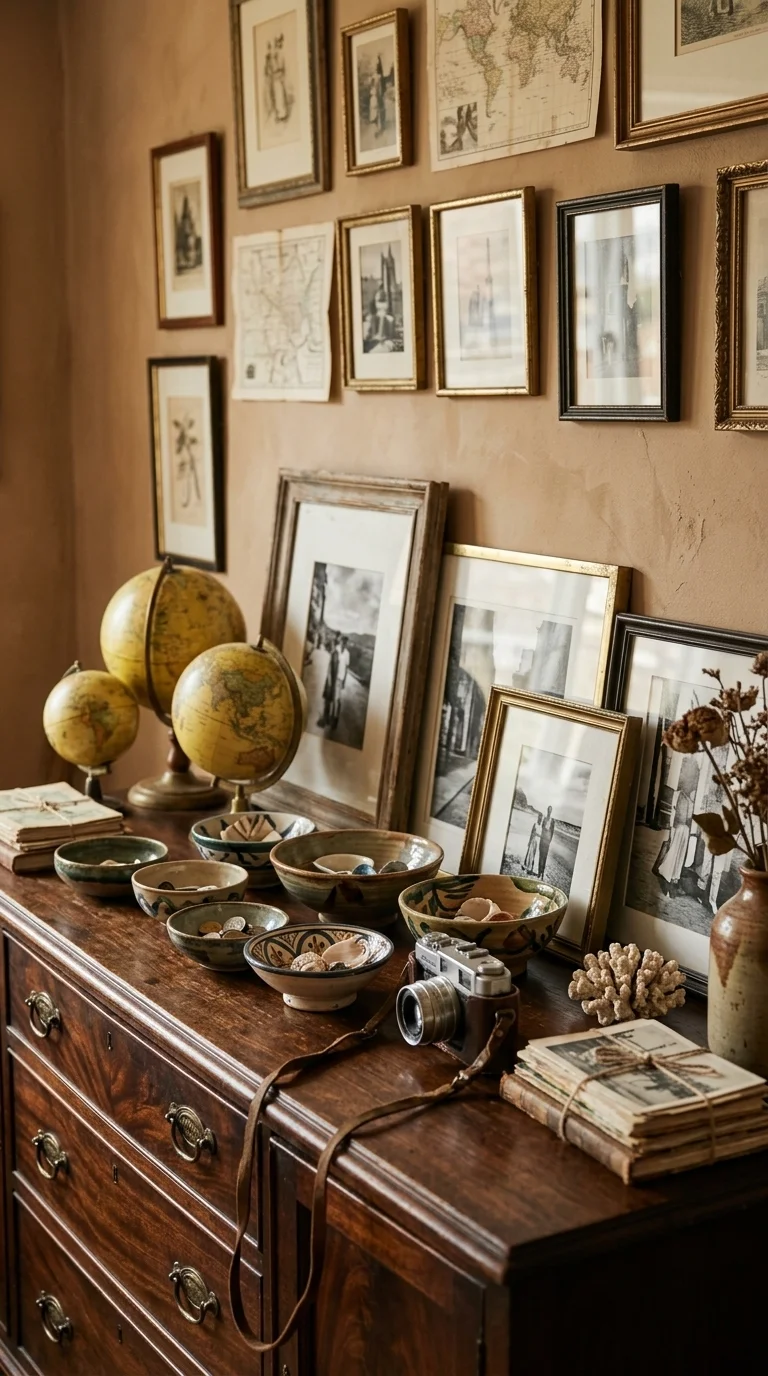
I love using a sideboard to tell a story, especially by displaying a curated collection. This could be anything from vintage ceramics to travel souvenirs or even a series of small botanical prints. I group items with a common theme or color palette, arranging them in odd numbers for a more natural look. For instance, I might display three different-sized antique glass bottles or five unique seashells. To avoid clutter, I’m careful not to put everything out at once; rotating pieces seasonally keeps the display fresh and allows each item to shine. This is a wonderful way to infuse personality into your dining space without spending a fortune.
Functional Beverage Station
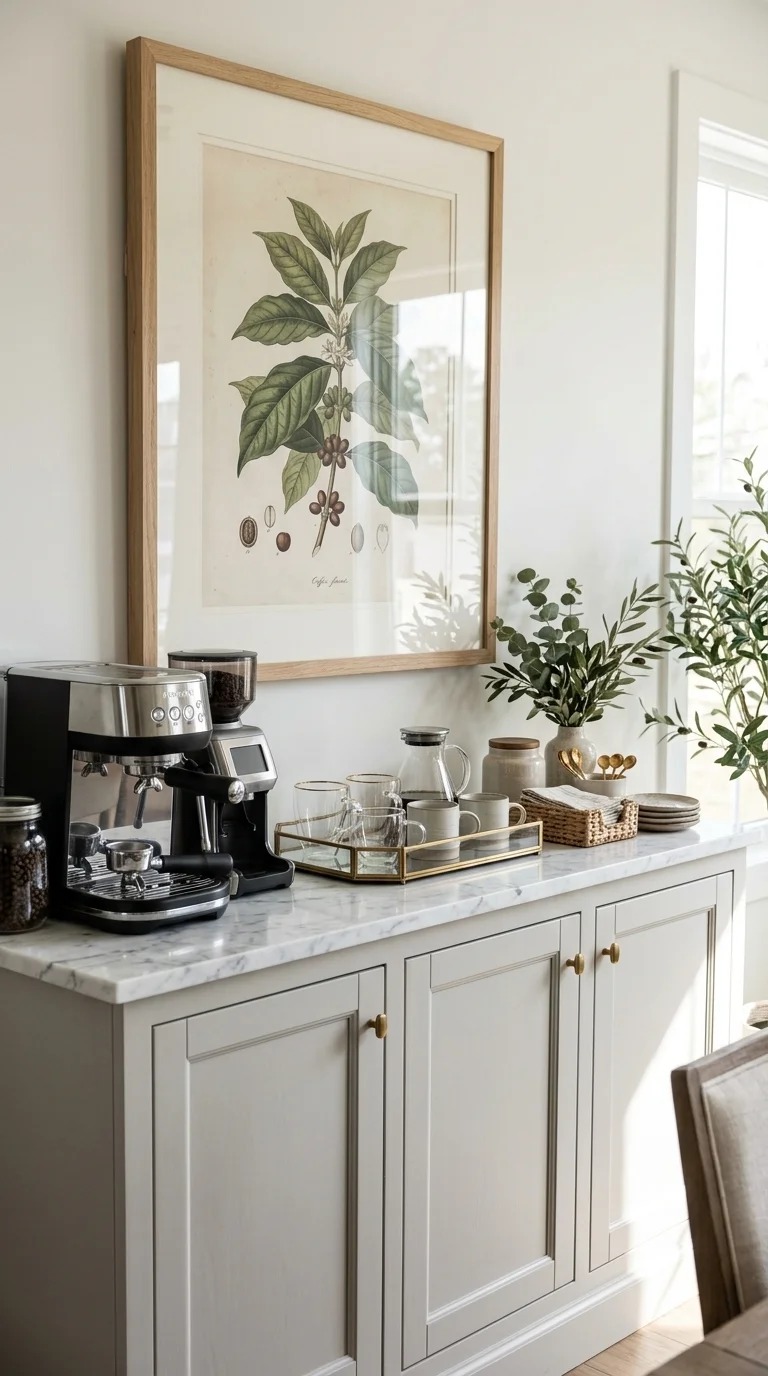
Sometimes, a sideboard needs to be more than just pretty – it needs to be functional! I often transform mine into a beverage station, perfect for entertaining. This could mean a coffee bar with a sleek machine, mugs, and a sugar caddy, or a sophisticated bar cart setup with decanters, various glasses, and a bucket for ice. I always use a stylish tray to corral smaller items, which makes it look organized and easy to clean. For a more budget-friendly approach, I’d use my existing serving dishes and glasses, focusing on a neat arrangement. A common mistake is overcrowding; leave enough space for guests to comfortably grab what they need.
Greenery and Natural Elements
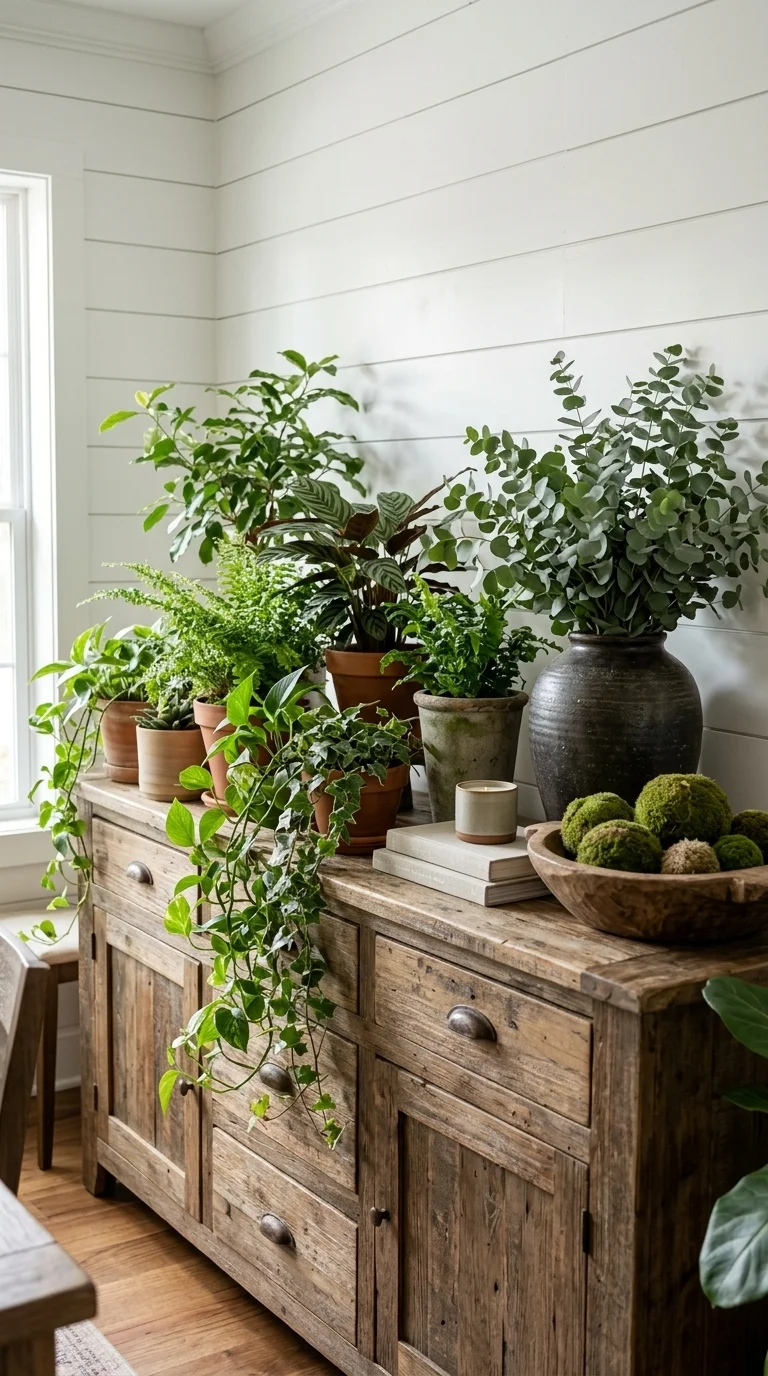
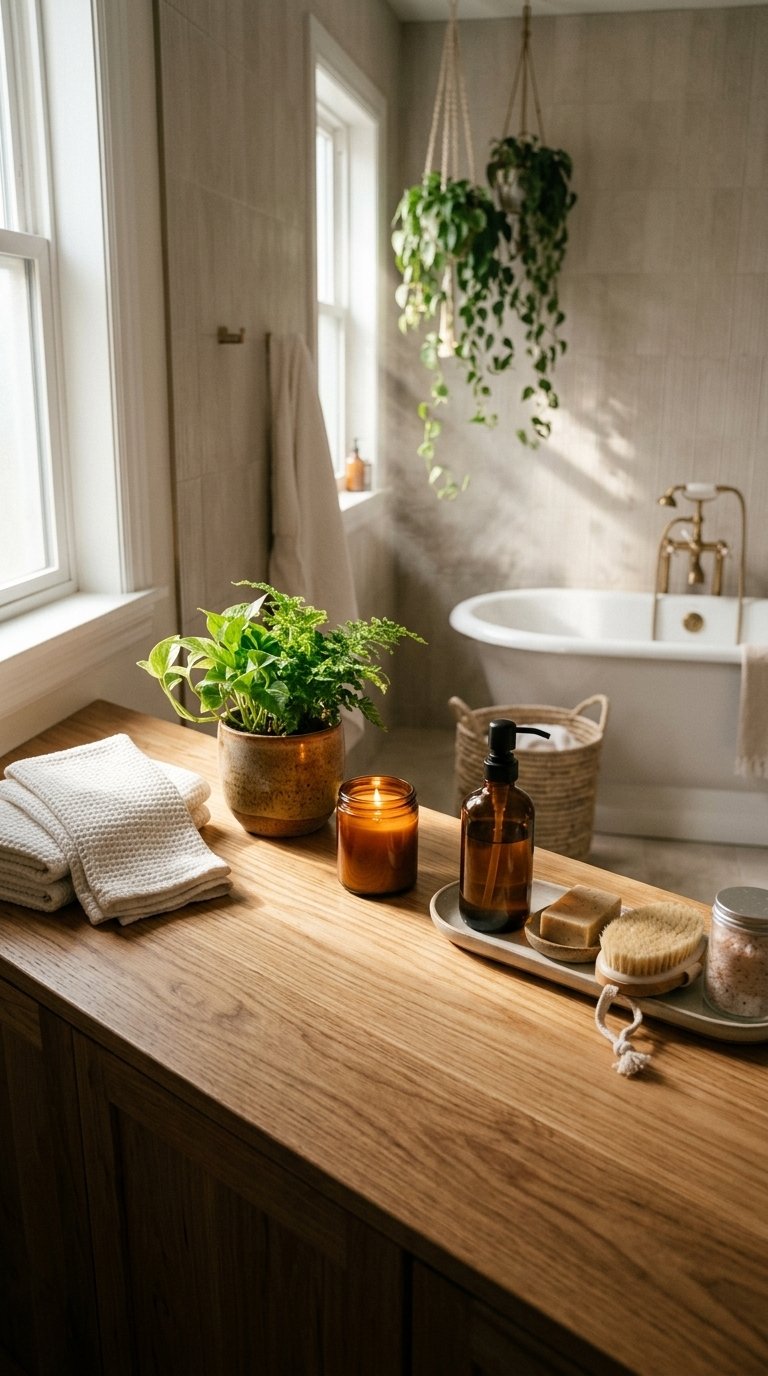
Bringing the outdoors in is one of my favorite ways to style any surface, and a sideboard is no exception. I love incorporating a mix of potted plants, fresh flowers, or even just some beautiful branches in a tall vase. Varying the plant types and pot materials—think terracotta, ceramic, and woven baskets—adds visual interest and texture. For those without a green thumb, high-quality faux plants are a fantastic alternative, requiring zero maintenance. I also enjoy adding natural elements like smooth river stones or a decorative bowl of pinecones during the colder months. This approach always makes a room feel more alive and welcoming.
Layered Art and Mirrors
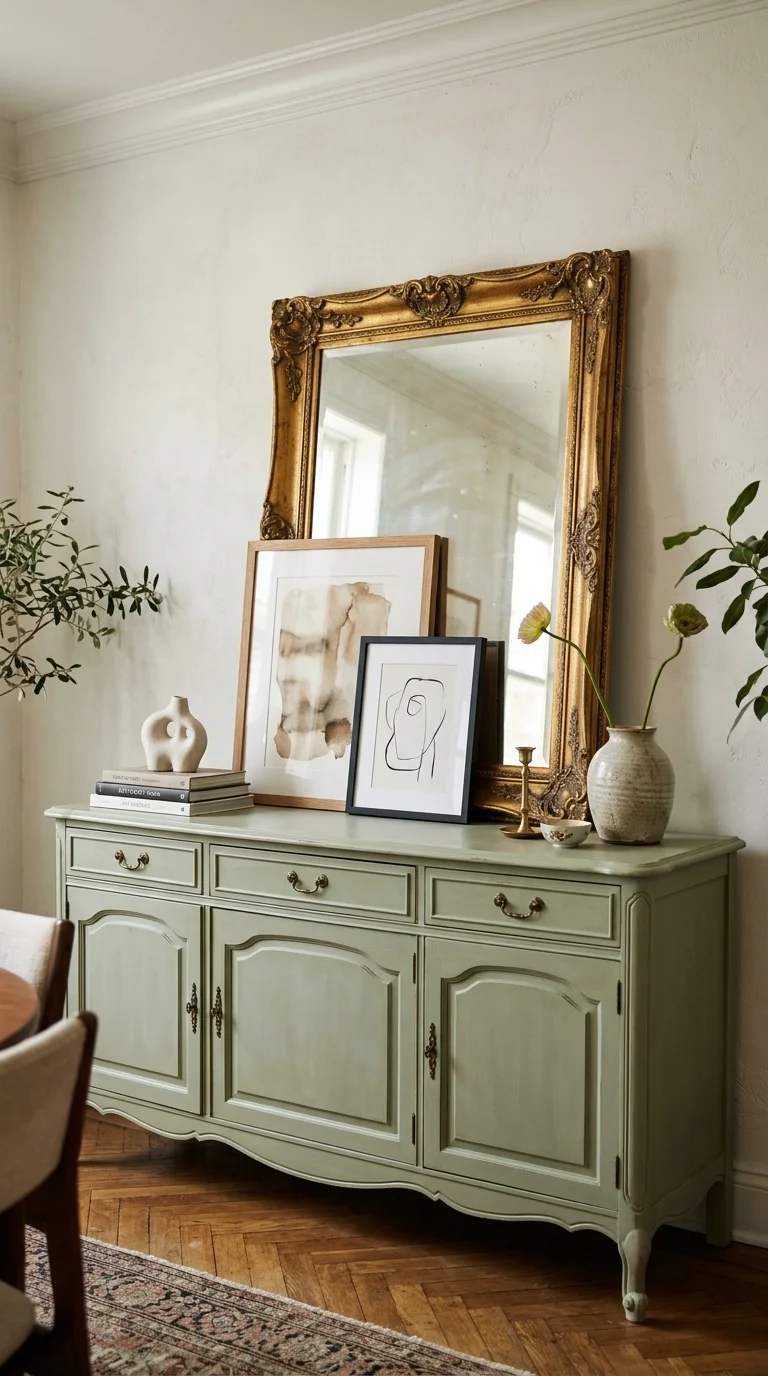
Layering artwork and mirrors is a brilliant way to add depth and personality to your sideboard display. I often start with a larger piece, like a grand mirror or a significant framed print, leaning it against the wall. Then, I layer smaller pieces in front, perhaps a contrasting framed photo or a small abstract painting. This creates a casual yet artistic vibe. I pay attention to the frames, mixing metals or finishes for an eclectic look, or keeping them cohesive for a more refined feel. A useful tip I’ve learned is to use Command strips for lighter frames to prevent them from sliding if you’re layering them. This method works especially well for smaller sideboards, as it maximizes visual impact without taking up too much surface space.
Seasonal Themed Vignette
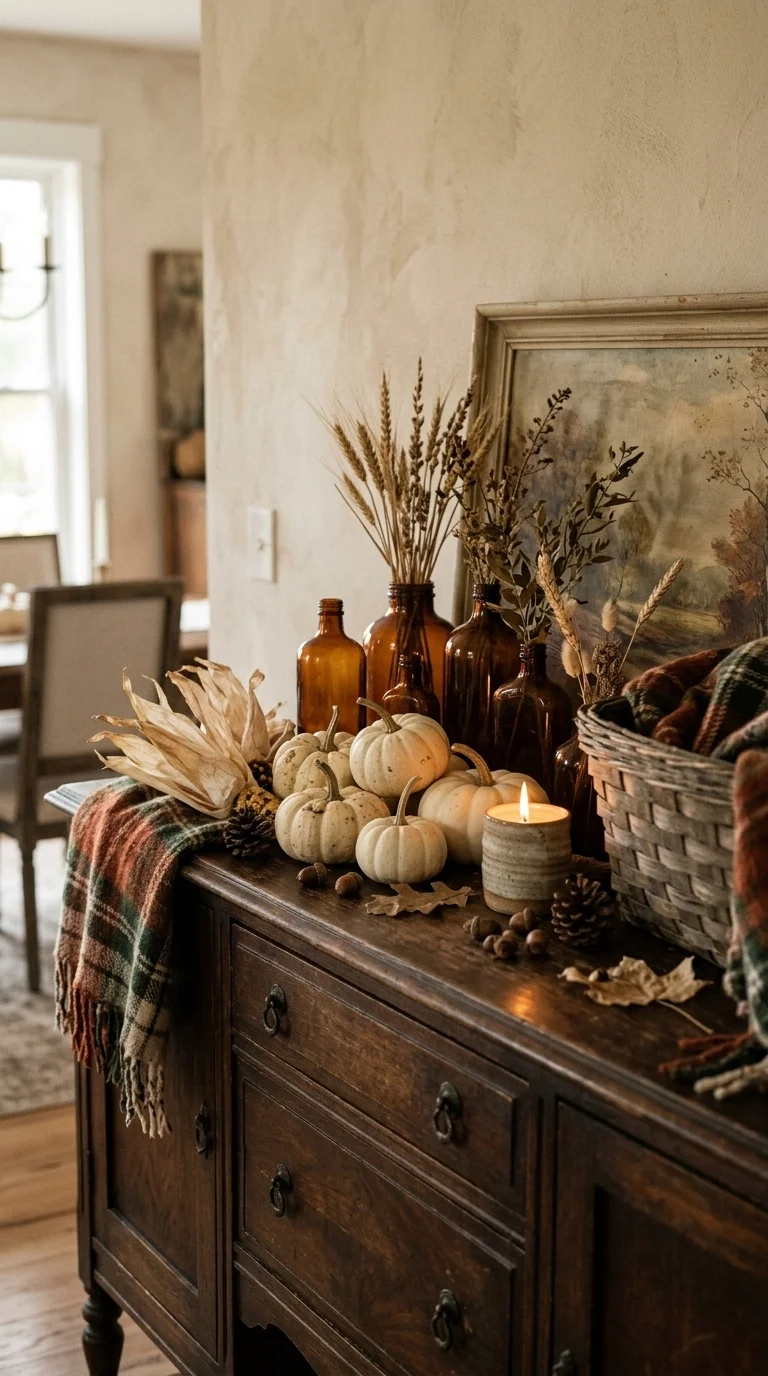
I absolutely love changing up my sideboard decor with the seasons! It’s an easy way to refresh the entire dining room’s mood. For autumn, I might arrange small pumpkins, gourds, and candles on a rustic tray, perhaps with some dried leaves or wheat stalks in a vase. In spring, I swap these for fresh tulips, pastel ceramics, and perhaps a bird’s nest. The trick is to pick a few key seasonal items and mix them with your everyday decor to keep it from feeling too “theme-park.” I always consider the colors of the season and try to incorporate them through flowers, textiles, or decorative accents. This approach is budget-friendly as you can reuse seasonal items year after year.
Minimalist and Modern Style
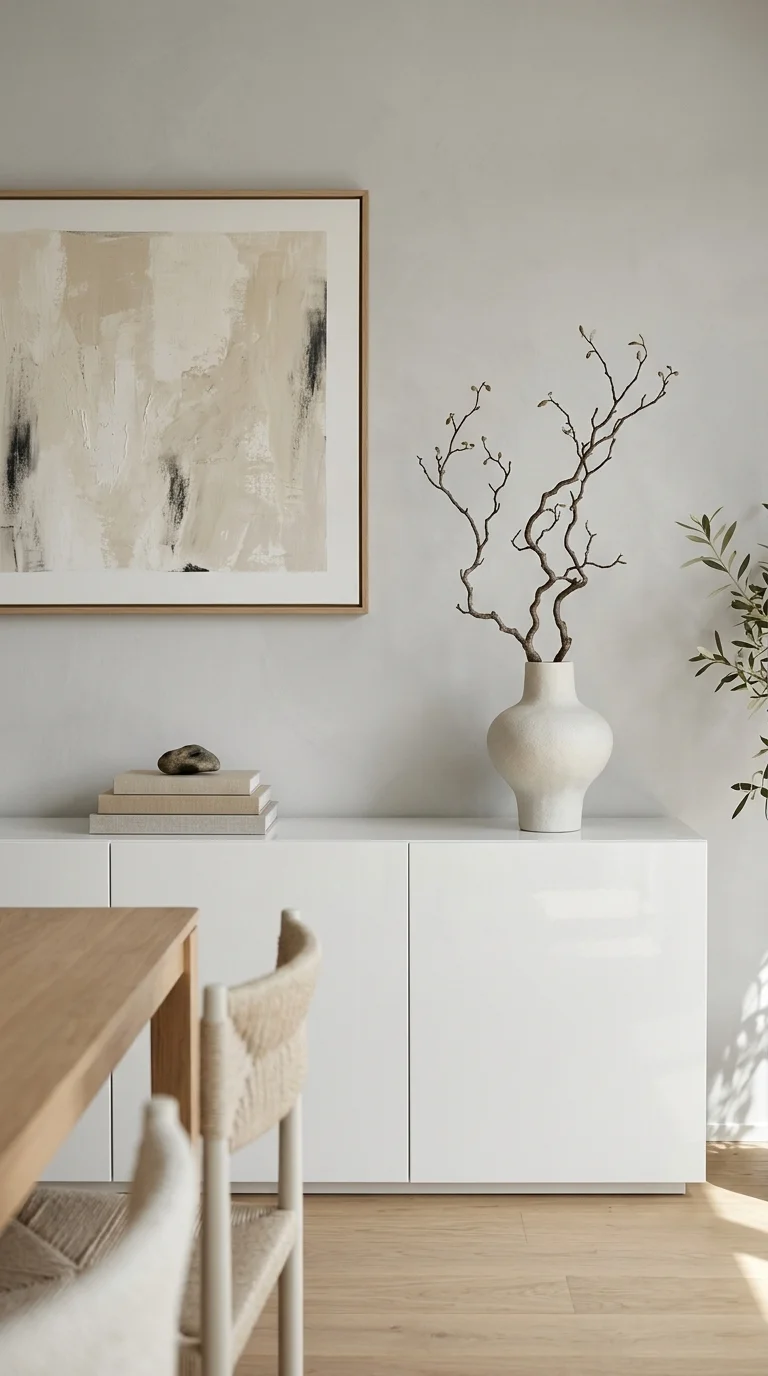
For those who prefer a clean, uncluttered look, I often recommend a minimalist approach to sideboard styling. This means fewer items, but each piece makes a significant impact. I would choose one or two sculptural objects—perhaps a unique ceramic vase with an interesting form or a single, striking piece of art. The key here is quality over quantity. I prefer neutral colors and clean lines, letting the shapes and textures speak for themselves. Avoid adding too many small trinkets, as this can quickly make a minimalist space feel busy. The beauty of this style is its simplicity; it promotes a sense of calm and spaciousness in the dining area.
Bookshelf Inspired Display
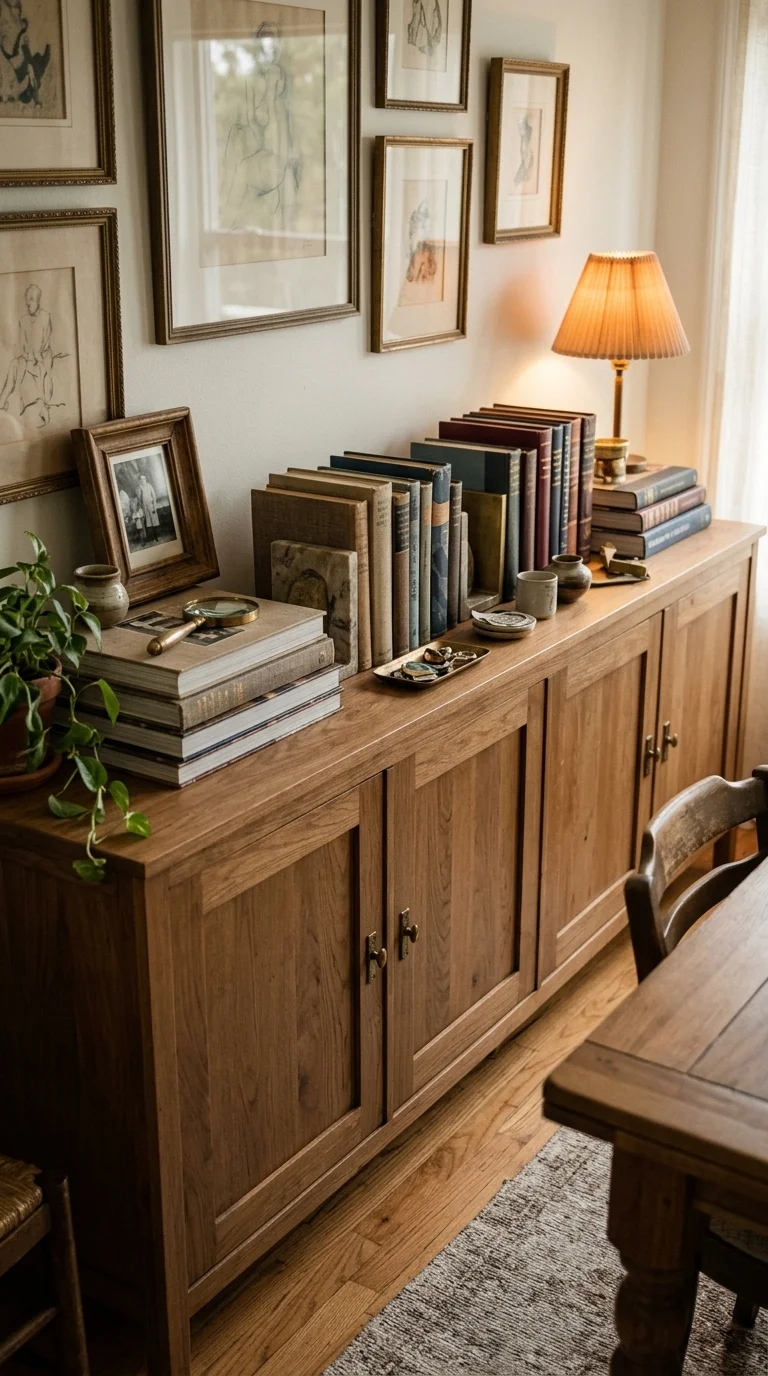
I sometimes treat my sideboard like a mini-bookshelf, especially if I have a collection of beautiful coffee table books. I love stacking books both horizontally and vertically to create varying heights and visual interest. In between the stacks, I’ll tuck in small decorative items like a unique paperweight, a vintage clock, or a small plant. This approach adds an intellectual and cozy vibe to the dining room. I always try to mix textures by adding a metallic object or a ceramic piece among the books. A common mistake is just lining up books like a library; the key is to break them up with other elements to create a dynamic display.
Rustic Farmhouse Charm
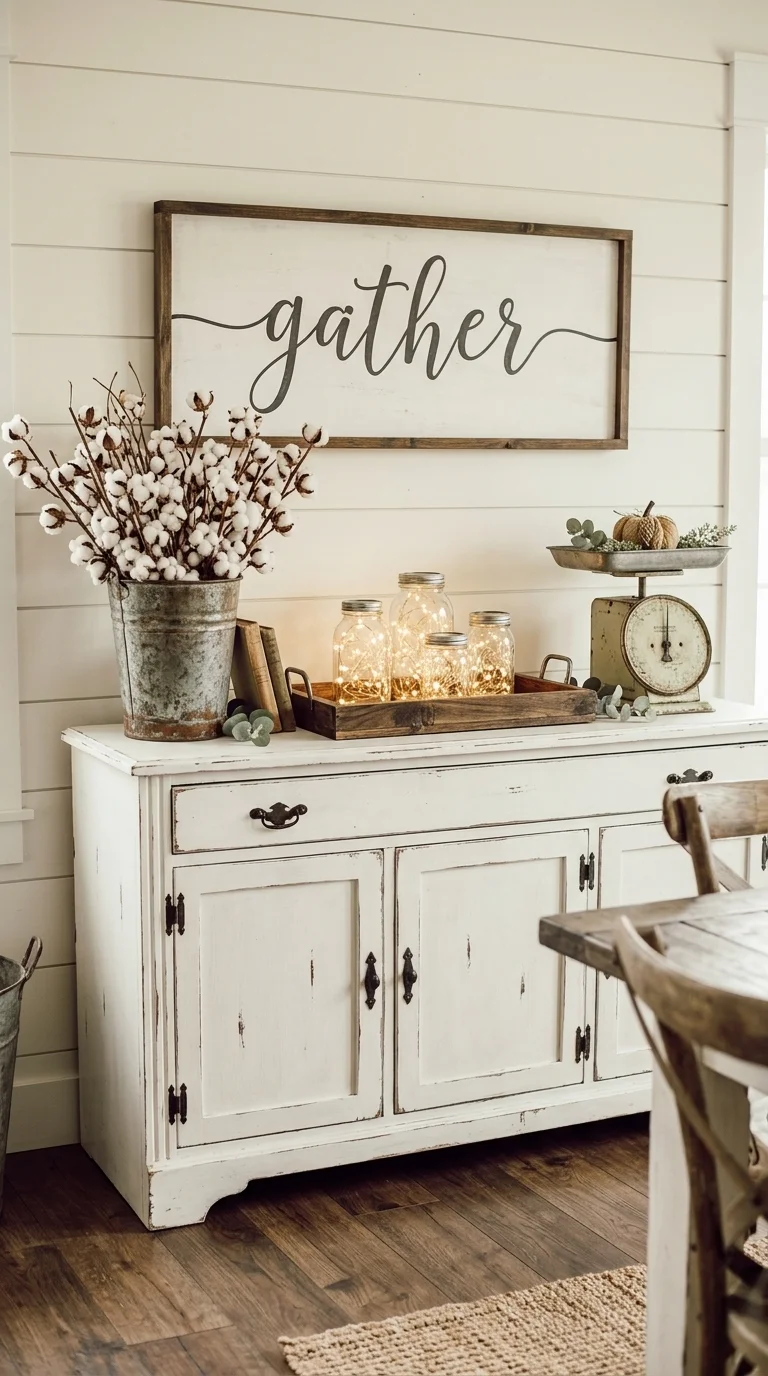
For a cozy, welcoming feel, I often lean into rustic farmhouse charm for my sideboard styling. I love using natural, distressed materials like reclaimed wood, galvanized metal, and woven baskets. Think about a large, ceramic pitcher filled with faux cotton stems, or a wooden tray holding a few mason jars with fairy lights inside. I might also add a vintage-inspired clock or a small antique scale. The key is to embrace imperfections and a sense of history. For a budget-friendly option, I would scour flea markets for unique finds that I could easily upcycle with a bit of paint or sanding. This style always makes a dining room feel warm and inviting.
Elegant Candle Display
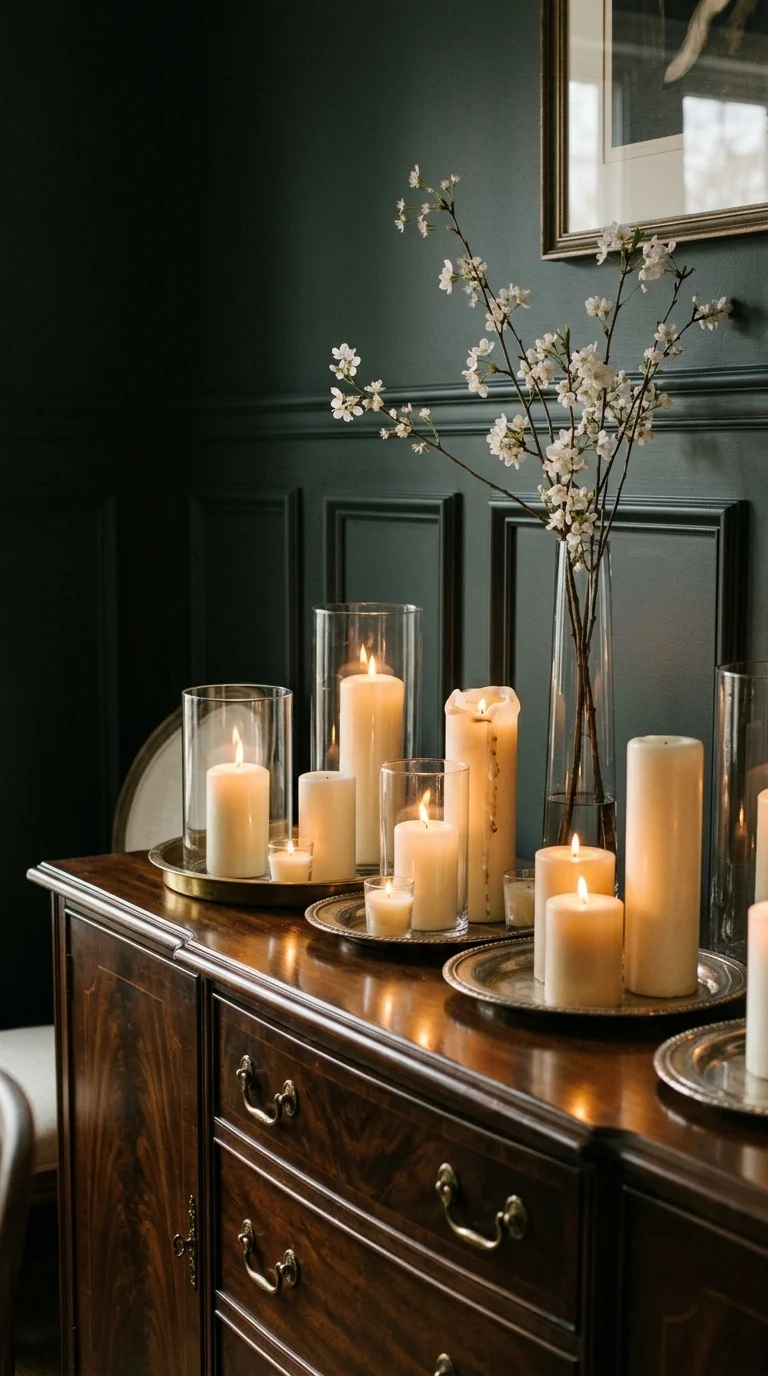
There’s something incredibly enchanting about an elegant candle display on a dining room sideboard. I love to group pillar candles of different heights and widths, sometimes placing them in beautiful glass hurricanes for safety and added sparkle. Using a decorative tray, perhaps mirrored or metallic, helps reflect the light and keeps everything contained. The soft glow of candles creates such an intimate and sophisticated atmosphere, especially during evening meals. I always make sure to use unscented candles in a dining area to avoid interfering with food aromas. For a budget-conscious approach, simple white pillar candles in varying sizes can look incredibly chic when grouped thoughtfully.
Playful Pop of Color
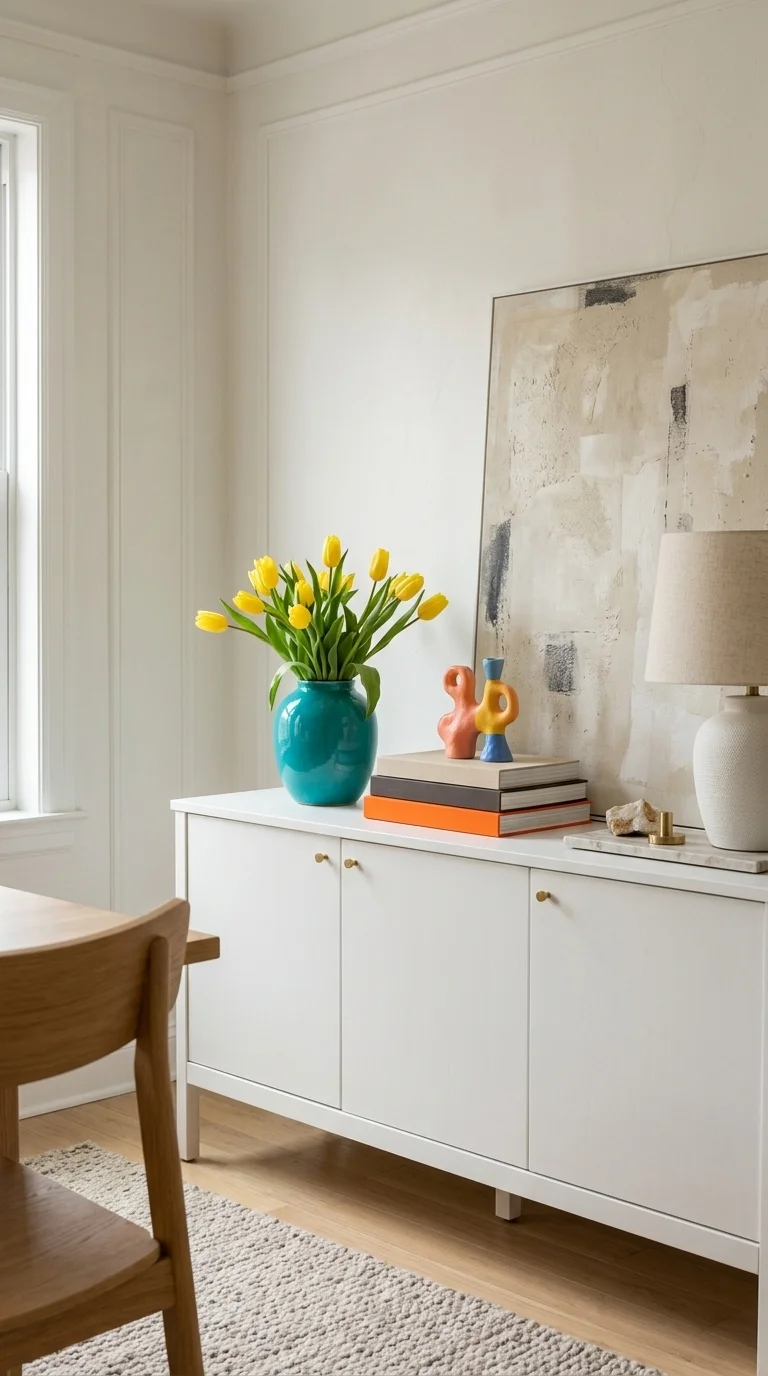
Sometimes, a dining room just needs a little burst of joy, and a playful pop of color on the sideboard is my go-to. If your room is largely neutral, adding one or two vibrant pieces can completely transform the mood. I might choose a bright ceramic vase in a bold hue like cobalt blue or sunny yellow, filling it with contrasting fresh flowers. Or, I’d incorporate a stack of books with colorful spines or a fun, small abstract sculpture. The key is not to overdo it; let one or two elements be the stars. I’ve found that even a colorful tea towel draped artfully can make a big difference without a big investment. It’s a fantastic way to inject personality and energy into the space.

One Comment